

Surgical dentistry
Wisdom Teeth Removal in Plantation, FL
Gentle wisdom teeth removal in Plantation, FL, planned with an in-office 3D CBCT scan so impacted or painful wisdom teeth come out safely and comfortably.
- Relief from wisdom tooth pain
- Protects your other molars
- Prevents infection and cysts

Overview
What to know about wisdom teeth removal
Wisdom tooth pain has a way of showing up at the worst time - a dull ache at the back of your jaw, swollen gums, or a bad taste that won't go away. At Westside Dental Center, we provide gentle wisdom teeth removal in Plantation, FL for teens and adults, with every case planned on a 3D scan so your procedure is as safe, quick and comfortable as possible.
Dr. Uttma Dham has more than 20 years of experience caring for patients in Plantation and across Broward County. She will show you exactly where your wisdom teeth sit, explain whether they really need to come out, and walk you through your options and costs before anything is scheduled.
What are wisdom teeth?
Wisdom teeth are your third molars - the last teeth at the very back of your mouth. Most people have four, one in each corner, and they usually try to come in between the ages of 17 and 25. Some people never develop them at all, and some have fewer than four.
Because they arrive last, wisdom teeth often run out of room. Instead of growing in straight, they can stay trapped under the gums or bone, come in at an angle, or break through only partway. That is when they start causing problems - and when removing them is usually the best way to protect the rest of your smile.
Signs you may need your wisdom teeth removed
Wisdom teeth don't always hurt, even when they are causing damage. That's why we check them on X-rays during regular visits. Common signs that it's time for a wisdom teeth evaluation include:
- Wisdom tooth pain or pressure at the back of your jaw, sometimes spreading to your ear or head
- Red, swollen or tender gums behind your last molars
- A bad taste or bad breath that keeps coming back
- Jaw stiffness or difficulty opening your mouth fully
- Food that keeps getting trapped behind your back teeth
- Cavities or gum problems on the wisdom tooth or the molar in front of it
- Crowding pressure on your other teeth, especially after orthodontic treatment
What are impacted wisdom teeth?
A wisdom tooth is impacted when it can't come in normally because something - usually the tooth in front of it or the jawbone - is in the way. Impacted wisdom teeth can be tilted forward, tilted back, lying on their side or sitting straight but stuck below the gums. A tooth may be covered only by gum tissue (a soft-tissue impaction) or partly or fully buried in bone (a bony impaction).
Partially erupted wisdom teeth are the most likely to cause trouble. The small flap of gum over the tooth traps food and bacteria, which can lead to a painful infection called pericoronitis. Fully impacted wisdom teeth can also form fluid-filled cysts or press against the roots of the second molar. Finding these problems early makes wisdom tooth extraction simpler and recovery easier.
Is wisdom teeth removal always necessary?
No - and we'll always tell you honestly. If your wisdom teeth are healthy, fully grown in, in a good bite position and easy to keep clean, they may be able to stay. We'll simply keep an eye on them at your checkups.
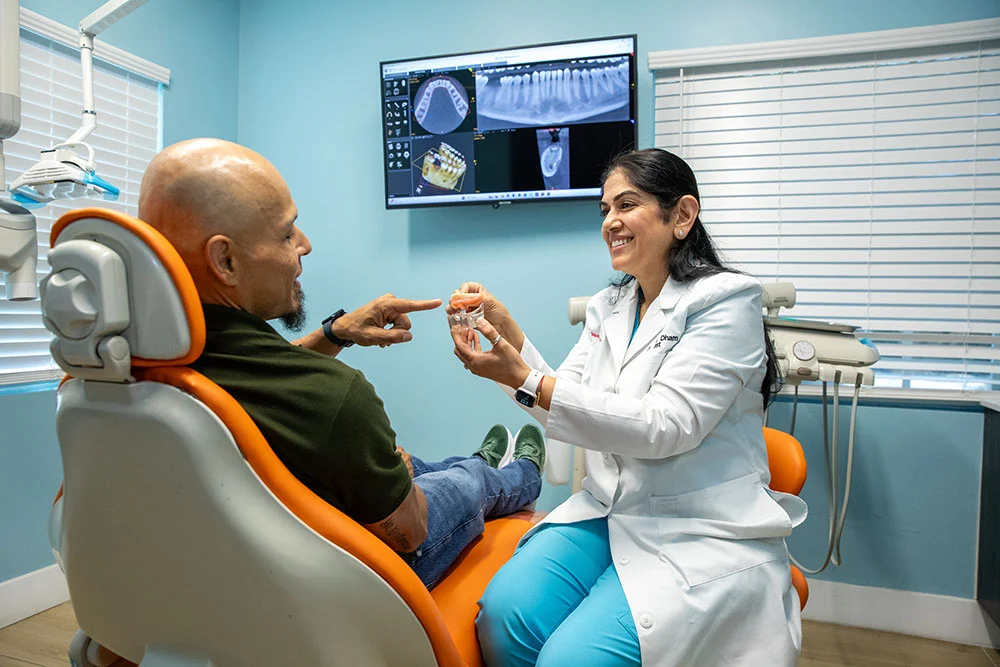
Wisdom teeth removal is usually recommended when the teeth are impacted, only partly erupted, causing pain or repeated infections, damaging the teeth next to them or making it impossible to clean the back of your mouth. Dr. Dham will review your 3D scan with you and explain why she recommends removing a tooth - or why it's fine to leave it alone for now.
What is the best age for wisdom teeth removal?
Many dentists recommend evaluating wisdom teeth in the late teens. At that age the roots are often not fully formed, the bone is softer, and wisdom tooth extraction is typically quicker, with a faster recovery. That doesn't mean adults are too late - we remove wisdom teeth for patients in their 30s, 40s and beyond. It simply means problems are easier to fix when they're caught early.
How much does wisdom teeth removal cost?
The cost depends on your individual case. The main factors are:
- How many wisdom teeth need to come out
- Whether each tooth is fully erupted, partly erupted or impacted in the bone
- Whether 3D imaging is needed to plan the procedure safely
- The type of anesthesia or sedation you choose
We are in-network with most PPO dental plans, and many plans cover part of wisdom tooth extraction - especially when the teeth are impacted or causing problems. Our team will check your benefits and give you a clear estimate before your procedure. Flexible payment options are available through CareCredit, Proceed Finance and LendingClub Patient Solutions.
Wisdom teeth removal recovery: what to expect
Most people feel noticeably better within three to four days, and the gums usually heal within about two weeks. Every recovery is a little different, but here is a typical timeline:
- The first 24 hours: Rest, keep your head raised and bite gently on gauze to control light bleeding. Use an ice pack on your cheek, 15 minutes on and 15 minutes off.
- Days 2 to 3: Swelling and jaw stiffness usually peak, then begin to ease. Start gentle warm salt-water rinses after the first day.
- Days 4 to 7: Most people are back to school, work and normal routines, still choosing softer foods.
- Weeks 1 to 2: The gums close over the sockets. The bone underneath keeps filling in over the next few months.
What to eat after wisdom teeth removal
For the first few days, choose soft, cool or lukewarm foods that don't need much chewing - yogurt, smoothies eaten with a spoon, applesauce, mashed potatoes, scrambled eggs, soup that isn't too hot, oatmeal, pasta and soft fish. Slowly add firmer foods as you feel comfortable.
Avoid crunchy, crumbly, spicy and very hot foods, and anything with small seeds that can lodge in the sockets. Skip straws, alcohol and smoking while you heal, and drink plenty of water.
How to avoid dry socket
Dry socket happens when the blood clot that protects the socket is dislodged or dissolves too early, leaving the bone exposed. It's most common after lower wisdom tooth extraction and usually shows up two to four days after the procedure as throbbing pain that can spread toward the ear.
To protect the clot, don't use straws, don't spit forcefully, avoid smoking and vaping, and follow the rinsing instructions we give you. If you think you have a dry socket, call us - it's very treatable, and a medicated dressing usually brings quick relief.
When to call us after your procedure
Call or text us at (954) 476-4535 if you have bleeding that won't slow down with firm gauze pressure, swelling that keeps getting worse after the third day, a fever, pus, numbness that doesn't wear off, or pain that suddenly gets worse instead of better.
We provide wisdom teeth removal for patients from Plantation, Sunrise, Davie, Weston, Cooper City and Fort Lauderdale. Need a different tooth taken out? Learn about our tooth extraction care. In pain right now? See our emergency dentist page.
Benefits
Why patients choose Wisdom Teeth Removal
Relief from wisdom tooth pain
Removing a problem wisdom tooth ends the ache, pressure and swelling at the back of your jaw.
Protects your other molars
Prevents an impacted tooth from damaging the roots or gums of the tooth in front of it.
Prevents infection and cysts
Stops repeated gum infections and lowers the risk of cysts around buried teeth.
Planned in 3D
An in-office CBCT scan shows each root and the nearby nerve before we begin.
Comfort first
Thorough numbing, a calm team and sedation options to discuss if you feel anxious.
Clear aftercare
Written recovery instructions, a direct number to call and a follow-up check.
Step by step
How your treatment works
Exam & 3D Imaging
Dr. Dham examines your mouth and takes digital X-rays and, when needed, a CBCT scan to see each wisdom tooth, its roots and the nerve.
Your Plan & Costs
We explain which teeth should come out and why, what to expect and the cost - including what your insurance is likely to cover.
Comfortable Numbing
The area is numbed thoroughly before we begin. If you're nervous, we'll talk about sedation options ahead of time.
Gentle Removal
Erupted teeth are removed gently. Impacted teeth may be lifted out in small sections, which is easier on the surrounding bone.
Protecting the Site
We clean the socket, place gauze and, when needed, dissolving stitches to help the area heal well.
Aftercare & Follow-Up
You go home with clear recovery instructions, and we check your healing to make sure everything is on track.
Who it’s for
Is wisdom teeth removal right for you?
- Have wisdom tooth pain or pressure at the back of your jaw
- Have swollen, tender gums behind your last molars
- Were told you have impacted or partly erupted wisdom teeth
- Keep getting infections or a bad taste around a back tooth
- Have cavities or gum problems on a wisdom tooth or the molar beside it
- Are a teen or young adult whose dentist recommends early removal
What to expect
Your visit, clearly explained
- An exam and 3D imaging before any treatment is scheduled
- A clear explanation of which teeth need to come out - and which can stay
- Thorough numbing, so you feel pressure but not pain
- Mild swelling and soreness for a few days, eased with ice and pain relievers
- Back to most normal activities within a few days
- A follow-up visit to check your healing
Technology
Precision you can feel
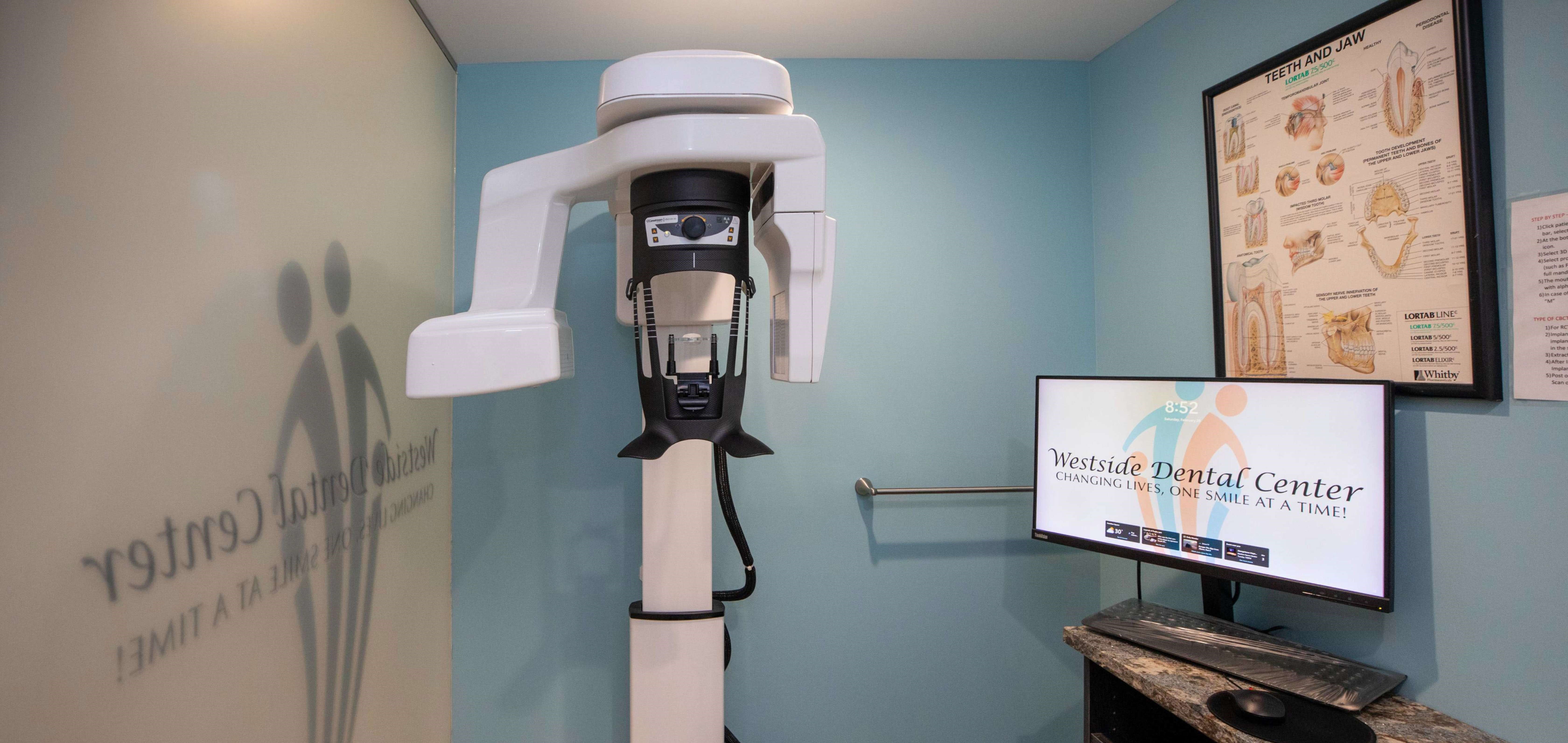
Wisdom teeth sit close to important structures, especially the nerve that runs through the lower jaw. Our in-office cone beam CT (CBCT) scanner creates a 3D image of your jaw in seconds, showing the exact position, angle and root shape of each wisdom tooth and how close it sits to the nerve and sinus. That lets Dr. Dham plan every wisdom tooth extraction precisely - with no trip to an outside imaging center.
Digital X-rays use far less radiation than traditional film, and AI-assisted X-ray analysis helps highlight areas of concern so nothing is missed. If your scan shows a case that is better handled by an oral surgeon, we'll tell you honestly and help coordinate your care.
FAQs
Questions about wisdom teeth removal
Can’t find your answer? Call us at (954) 476-4535.
Is wisdom teeth removal painful?
You shouldn't feel pain during the procedure - the area is numbed thoroughly first, so you'll only feel pressure. Afterward, some soreness and swelling for a few days is normal and is usually well controlled with ice and over-the-counter or prescribed pain relievers.
How long does wisdom teeth removal take?
A simple wisdom tooth extraction can take just a few minutes per tooth. Impacted wisdom teeth take longer. Most appointments to remove one to four wisdom teeth take under an hour, and we'll give you a time estimate in advance.
How much does wisdom teeth removal cost?
The cost depends on how many teeth are removed, whether they're erupted or impacted, the imaging needed and the type of anesthesia or sedation. We'll check your insurance and give you a clear estimate before treatment, and financing is available through CareCredit, Proceed Finance and LendingClub.
Does dental insurance cover wisdom teeth removal?
Many dental plans cover part of the cost, especially when the teeth are impacted, infected or causing pain. We're in-network with most PPO plans and will check your benefits for you before your procedure.
Will I be asleep for wisdom teeth removal?
Most wisdom tooth extractions are done comfortably with local anesthesia, so you're awake but numb. If you feel anxious, ask us about sedation options at your consultation - we'll explain what's available for your case.
How long is wisdom teeth removal recovery?
Most people feel much better within three to four days and are back to normal routines within about a week. The gums usually close within two weeks, and the bone continues to fill in over the next few months.
What can I eat after wisdom teeth removal?
Stick to soft, cool or lukewarm foods for the first few days - yogurt, smoothies eaten with a spoon, applesauce, mashed potatoes, eggs, soup and pasta. Avoid crunchy, spicy and very hot foods, and don't use a straw while you heal.
How do I know if I have a dry socket?
Dry socket usually causes throbbing pain two to four days after the extraction that gets worse instead of better, often spreading toward the ear. You may see an empty-looking socket or notice a bad taste. Call us - it's easy to treat, and relief is usually quick.
Do all four wisdom teeth have to come out at once?
Not necessarily. Many patients prefer to remove all problem wisdom teeth in one visit so there's only one recovery, but we can also remove them in stages. Dr. Dham will help you decide what makes the most sense for you.
When can I go back to work or school?
Many people return to school or desk work within two to three days. If your job is physically demanding, plan for a few more days, and avoid strenuous exercise for the first several days while the sockets heal.
Can wisdom teeth grow back?
No. Once a wisdom tooth is fully removed, it can't grow back. Very rarely, a person has an extra tooth that develops later, which we would see on your X-rays.
Related treatments
You may also be interested in

Tooth Extraction
Gentle tooth extraction in Plantation, FL for broken, infected or crowded teeth, with thorough numbing, same-day emergency visits and a plan to replace the tooth.
Emergency Dentist Services
Emergency dentist in Plantation, FL - same-day appointments for toothaches, broken teeth, swelling and lost fillings or crowns. Call or text (954) 476-4535.

Dental Implants
Dental implants in Plantation, FL - permanent, natural-looking replacements for one tooth, several teeth or a full arch, planned with CT imaging and 3D-printed surgical guides.
New & existing patients
Wisdom Tooth Pain? Let's Take a Look
Book a wisdom teeth evaluation with Dr. Dham. You'll get a 3D look at your wisdom teeth, an honest recommendation and a clear cost estimate before any treatment.