Technology
Advanced technology, gentler care.
Precise diagnosis means simpler, more comfortable treatment. Dr. Uttma Dham has brought the tools leading specialists rely on into our Plantation office - so more of your care stays under one roof.
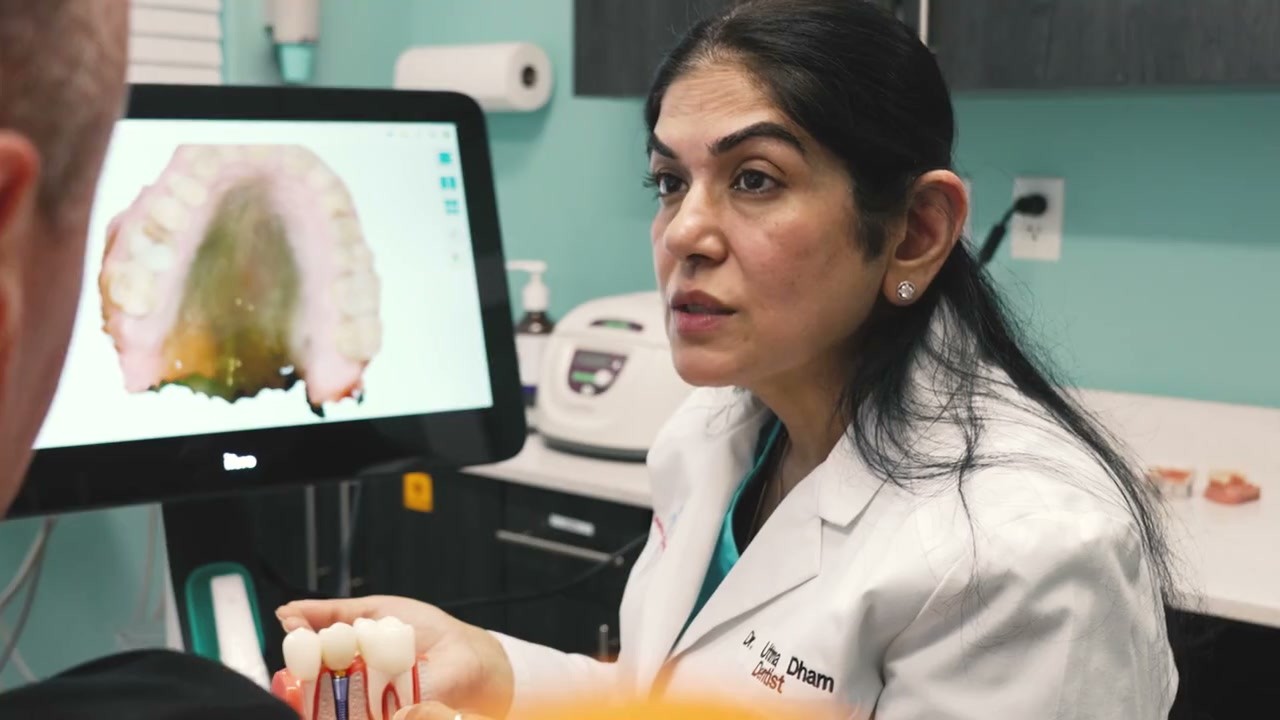
iTero Digital Scanner
Comfortable 3D impressions in minutes - no putty, no gagging.
Learn more →
CT Scan Machine
A complete 3D view of your jaw, roots, nerves and bone in under a minute.
Learn more →
Fotona Laser
Minimally invasive procedures with less bleeding, less discomfort and faster healing.
Learn more →
3D Printing Lab
Surgical guides, study models and provisional restorations made right here.
Learn more →
Overjet AI
FDA-cleared AI that highlights findings directly on your X-rays.
Learn more →
4.9
Google Rating
20+ Years
Serving South Florida
800+
Google reviews
5000+
Smiles Transformed
On video
See our Plantation office in action.
Our story, filmed in our Plantation office - the technology, the team and the care behind every visit.
Our Story
3:16
Accurate impressions without the mess
iTero Digital Scanner
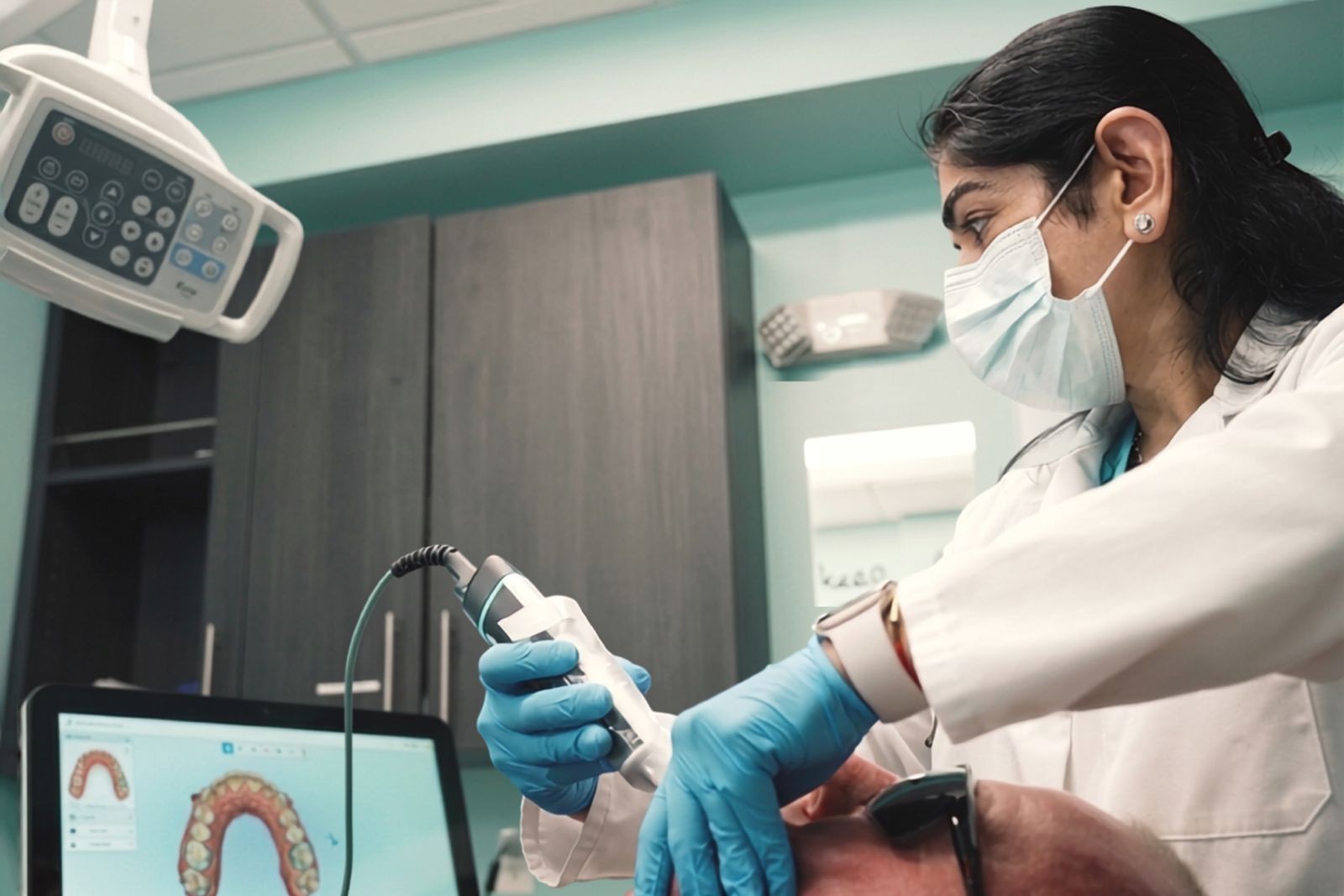
Gone are the days of biting down on trays full of cold, uncomfortable putty. At Westside Dental Center, Dr. Uttma Dham uses the iTero intraoral scanner to capture a precise 3D digital model of your teeth in minutes, no mess, no gagging, no waiting. Just an accurate, comfortable scan that feeds directly into your treatment plan.
What is the iTero digital scanner - and how is it different?
If you’ve ever had a traditional dental impression, you know the experience. A tray loaded with thick putty material is pressed against your teeth, held in place for several minutes while you try not to gag, and then sent off to a lab where it may take days or even weeks to come back as a model.
The iTero digital scanner replaces all of that with a small, handheld wand that your dental team gently moves around your mouth. In a matter of minutes, it captures thousands of images per second and stitches them together into a highly accurate, full-color 3D digital model of your teeth and gums right on screen, in real time.
No putty. No trays. No discomfort. And the results are actually more precise than traditional impressions, which can distort or shrink before they reach the lab.
For patients at Westside Dental Center, this means a faster, more comfortable appointment and restorations, aligners, and crowns that fit better from day one.
Benefits to our patients
Why patients at Westside Dental Center love the iTero scanner
01
No More Uncomfortable Putty Impressions
Traditional impressions are one of the most dreaded parts of a dental visit, especially for patients with a sensitive gag reflex. The iTero scanner eliminates that experience entirely. The handheld wand is small, smooth, and non-invasive. Most patients are genuinely surprised by how quick and easy the process is.
02
Faster, More Accurate Results
The iTero scanner captures your tooth and gum structure with submillimeter accuracy. That level of precision means your crown, aligner, veneer, or bridge is designed to fit your mouth exactly, reducing the need for adjustments and remakes. What used to take two appointments and weeks of waiting can now be completed far more efficiently.
03
See Your Smile in Real Time
One of the most exciting features of the iTero scanner is the ability to show you a digital model of your own teeth on screen during your appointment. For Invisalign patients, this pairs with the Invisalign outcome simulator - so you can actually preview what your smile could look like after treatment, before you commit to anything.
04
Everything Stays In-House
Your digital scan is stored securely and used directly in Dr. Dham’s treatment planning software. There’s no physical mold to ship to a lab, no risk of it being damaged in transit, and no unnecessary delays. It’s a seamless, connected workflow that keeps your care faster and more coordinated, all under one roof in Plantation.
How we use it
What does Dr. Dham use the iTero scanner for?
The iTero digital scanner isn’t just for one procedure - it’s a versatile tool that improves the accuracy and comfort of a wide range of treatments at Westside Dental Center:
Invisalign treatment
Digital impressions feed directly into the Invisalign ClinCheck software, allowing Dr. Dham to design your full aligner series and show you a before-and-after simulation of your results.
Dental crowns
Precise scans of the prepared tooth ensure your crown fits perfectly, minimizing adjustments at your fitting appointment.
Dental bridges
Full-arch scans capture the exact relationship between teeth, allowing for natural-looking, well-fitting bridgework.
Porcelain veneers
Detailed scans of your existing teeth are used to design veneers that complement your natural smile proportions.
Dental implant restorations
Scan data integrates with implant planning software for accurate placement of the final crown.
FAQ
Frequently asked questions about the iTero digital scanner
Is the iTero scanner comfortable?
The iTero scanner uses a small handheld wand to create a quick, comfortable digital scan - no putty, no pressure, and no gag-inducing impressions.
How long does a digital scan take?
A full-arch scan typically takes between two and five minutes, depending on the complexity of your case. It’s one of the quickest parts of your appointment, and you’ll be able to see your 3D model on screen almost immediately after.
Are digital impressions more accurate than traditional ones?
Yes, in most cases. Traditional putty impressions can shrink, distort, or trap air bubbles before they reach the lab. The iTero scanner captures your tooth structure with submillimeter precision and sends a perfect digital file directly to the design software with no risk of physical degradation along the way.
Do I need a digital scan for Invisalign?
Yes. The iTero scanner is the preferred method for capturing the initial impressions used to design your Invisalign aligners. It also powers the Invisalign outcome simulator, which allows Dr. Dham to show you a digital preview of your potential smile transformation before treatment begins.
Is there any preparation needed before a digital scan?
None at all. Just come in for your appointment as normal. Dr. Dham’s team will take care of everything. The scan is a quick, routine part of your visit and requires no special preparation on your part.
See the full picture before treatment begins
CT Scan Machine
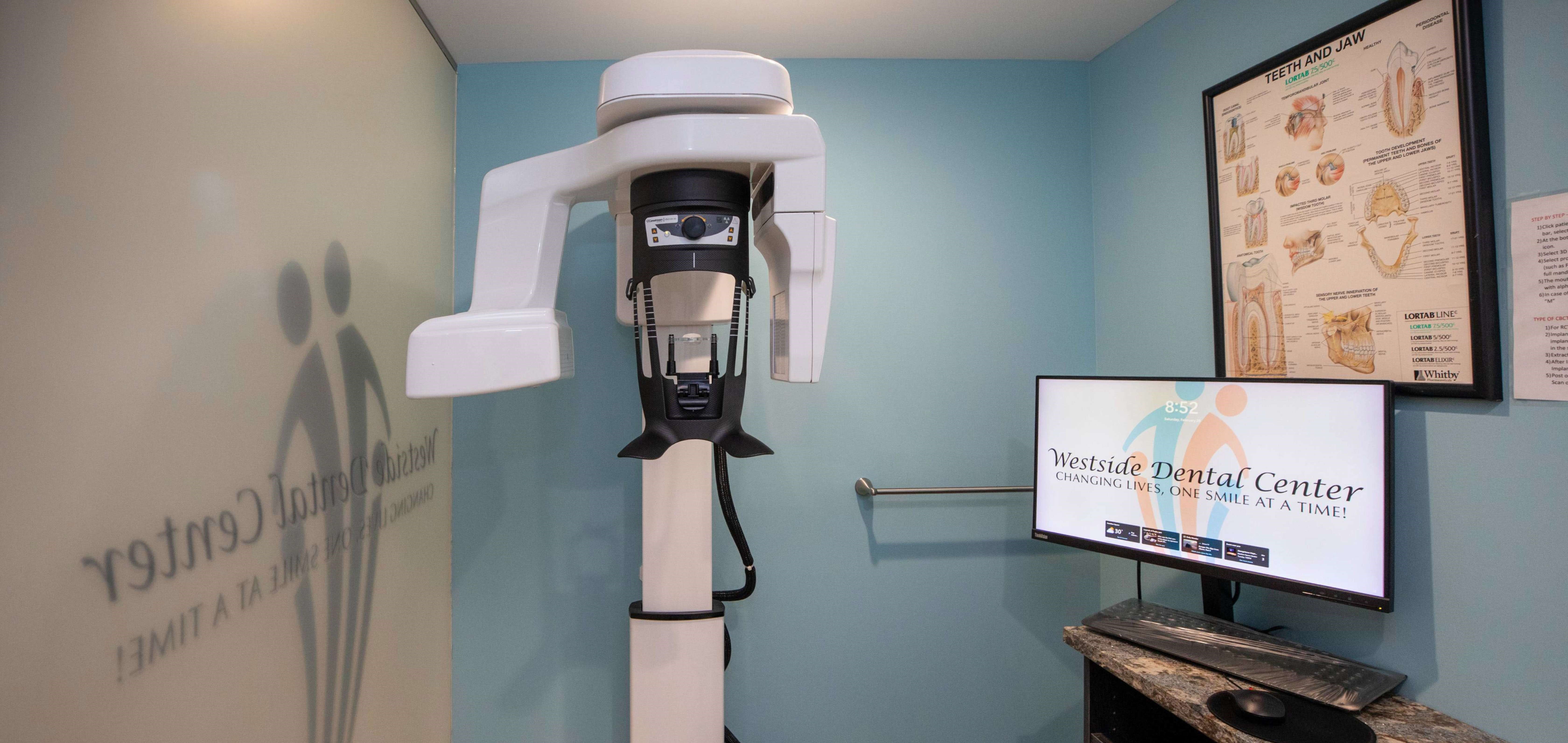
At Westside Dental Center, Dr. Uttma Dham uses cone beam CT scanning technology to get a complete, three-dimensional view of your jaw, teeth, nerves, and bone before placing a single implant or making a single incision.
What is a CT scan - and why does it matter for your dental care?
Most people have had a standard dental X-ray. It gives a flat, two-dimensional picture - useful, but limited. A CBCT (Cone Beam Computed Tomography) scan is something very different.
In under a minute, our CT machine rotates around your head and captures hundreds of images from every angle. Those images are then reconstructed into a highly detailed 3D model of your entire oral and facial structure - your jawbone, tooth roots, sinuses, nerve pathways, and surrounding tissue, all in one view.
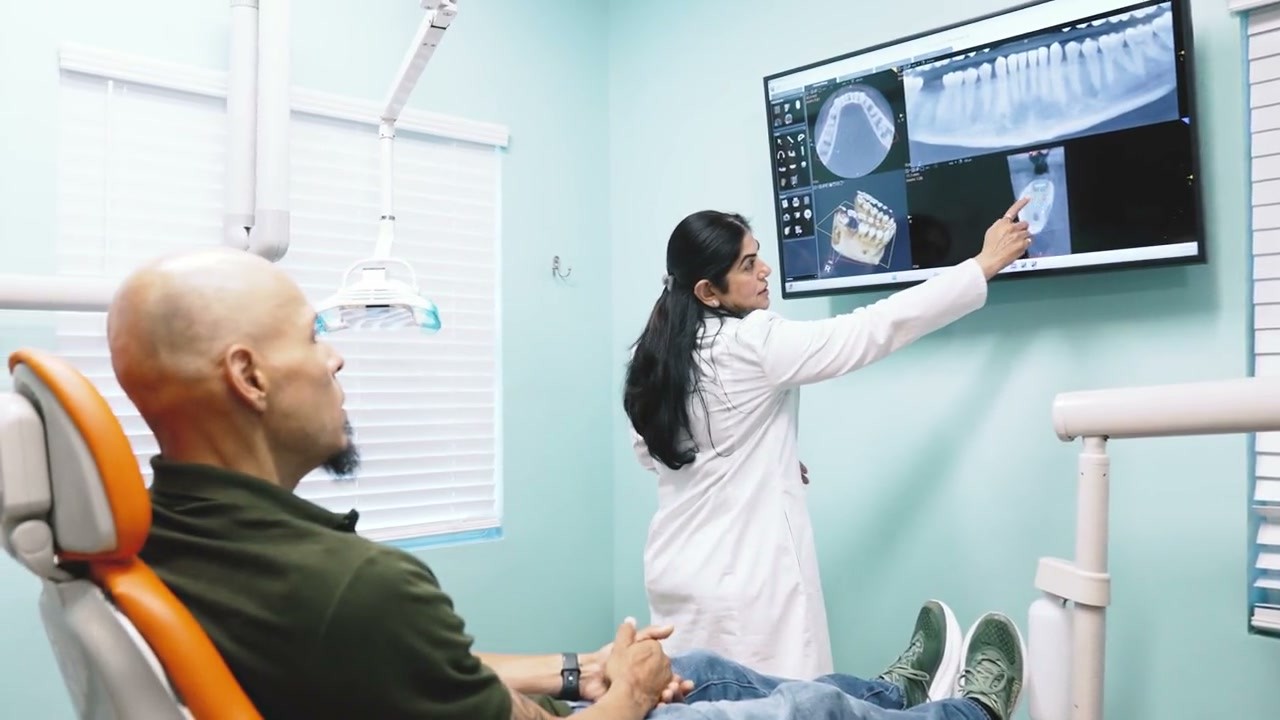
For Dr. Dham, this changes everything about how she plans your treatment. Instead of estimating, guessing, or discovering complications mid-procedure, she can map out every step in advance with the exact measurements, bone density data, and anatomical landmarks she needs to get it right the first time.
Why we use CT scan
Why Dr. Dham relies on CT imaging for complex dental treatment
01
Guided Implant Placement - No Guesswork
Dental implant surgery requires exact knowledge of where the nerves are, how dense the bone is, and where the implant can be placed safely. With CT imaging, Dr. Dham can plan the entire implant procedure in 3D before she ever begins. The result? Implants placed with greater accuracy, fewer complications, and better long-term outcomes.
02
Better Planning Means Better Experiences
When a dentist knows exactly what to expect before treatment begins, procedures go more smoothly and recovery is faster. CT imaging helps Dr. Dham avoid unexpected complications, reduce procedure time, and give you a more comfortable experience from start to finish.
03
Everything in One Appointment
Our CT scan is performed right here in our Westside Dental Plantation office - no referrals, no trips to a radiology center, no waiting days for results. Dr. Dham can review your 3D scan during your consultation and begin mapping your treatment plan the same day.
How we use it
When does Dr. Dham use CT scanning?
Dental implant planning
To evaluate bone volume, density, and the location of nerves before implant placement.
Wisdom tooth assessment
To determine the exact position of impacted teeth relative to the inferior alveolar nerve.
Full mouth restoration
To evaluate overall jaw structure, bite alignment, and bone health before comprehensive treatment.
Orthodontic evaluation
To assess jaw development and tooth positioning for Invisalign planning.
Bone loss assessment
To evaluate the extent of bone loss in patients with gum disease or those being considered for bone grafting.
FAQ
Frequently asked questions about CBCT scans
Is a CT scan safe?
Yes. CT scans use a focused, cone-shaped X-ray beam that captures the area of interest with significantly less radiation than a traditional medical CT scan. Dr. Dham follows the ALARA principle - As Low As Reasonably Achievable - and only recommends CT imaging when the clinical benefit clearly outweighs any minimal exposure. The scan itself takes less than 60 seconds.
How is a CT scan different from a regular dental X-ray?
A standard dental X-ray is a two-dimensional image - it shows height and width, but not depth. A CT scan produces a full 3D model of your jaw and surrounding structures, giving Dr. Dham detail that simply isn’t visible on a flat image. Think of it as the difference between a photograph and a detailed architectural blueprint.
Does the CT scan hurt?
Not at all. You simply sit or stand while the scanner rotates around your head. There’s nothing inserted into your mouth, no discomfort, and no recovery time. It takes under a minute to complete.
Do you charge separately for the CT scan?
Scan fees are discussed transparently as part of your treatment consultation. Dr. Dham’s team will walk you through all costs clearly before any treatment begins - no surprises.
Will I need a CT scan before dental implants?
In most cases, yes. CT imaging is considered the standard of care for implant planning because it allows Dr. Dham to assess bone volume, locate nerves precisely, and design a guided surgical plan before any procedure begins. It is one of the key reasons our implant outcomes are consistently excellent.
Gentler treatment, better results
Fotona Laser
At Westside Dental Center, Dr. Uttma Dham uses the Fotona LightWalker dental laser to perform a wide range of procedures with less discomfort, less bleeding, and faster recovery than traditional methods. If the idea of drills and scalpels has ever kept you from getting the dental care you need, laser dentistry changes everything.
What is the Fotona LightWalker laser - and how does it work?
For patients who experience dental anxiety, or who have simply avoided certain treatments because of concern about discomfort, the Fotona laser is genuinely worth knowing about.
Benefits to our patients
Why Dr. Dham chose the Fotona LightWalker for her Plantation patients
01
Faster Healing and Less Downtime
Because the laser works with such precision, it causes minimal trauma to the surrounding tissue. There’s less bleeding, less swelling, and significantly less post-procedure discomfort compared to traditional surgical methods. Most patients treated with the Fotona laser at Westside Dental Center return to their normal routine the same day or the day after with little to no need for extended recovery.
02
Exceptional Precision - Healthy Tissue Stays Healthy
One of the key advantages of laser dentistry over traditional methods is selectivity. The Fotona LightWalker targets only the tissue that needs to be treated, leaving everything around it intact. Whether Dr. Dham is removing diseased gum tissue, treating a cavity, or reshaping the gum line, the laser works with a level of precision that a drill or scalpel simply cannot match.
03
Versatile Tool Across Multiple Procedures
The Fotona LightWalker operates on two wavelengths, Nd:YAG and Er:YAG, which means it can be used across a far broader range of dental procedures than single-wavelength lasers. From deep gum treatment to cavity preparation to cosmetic gum contouring, it’s one instrument that handles many roles - reducing the need for multiple tools or referrals to specialists.
How we use it
What procedures does Dr. Dham perform with the Fotona laser?
Laser gum disease treatment
Removes infected and diseased gum tissue with precision, while stimulating healthy tissue regeneration and reducing bacteria deep in the periodontal pocket.
Cavity removal & preparation
In many cases, the laser can remove decayed tooth structure without the need for a traditional drill, making the experience far more comfortable - especially for anxious patients.
Gum contouring & reshaping
For patients with a gummy smile or uneven gum line, the laser sculpts tissue precisely and comfortably, with minimal bleeding and very fast healing.
Soft tissue procedures
Frenectomies, lesion removal, and other soft tissue treatments are performed quickly and gently, often without stitches.
Root canal disinfection
The laser penetrates deep into root canals to eliminate bacteria that traditional irrigation may miss, improving outcomes for root canal therapy.
Teeth whitening enhancement
Laser energy activates whitening agents for faster, more dramatic in-office whitening results.
Treatment of cold sores & ulcers
Low-level laser therapy can reduce the pain and healing time of oral ulcers and herpetic lesions significantly.
Snoring and mild sleep apnea treatment
The Fotona NightLase protocol uses gentle laser energy to tighten soft palate tissue, offering a non-surgical option for patients with snoring or mild obstructive sleep apnea.
FAQ
Frequently asked questions about Fotona laser dentistry
Is laser dentistry safe?
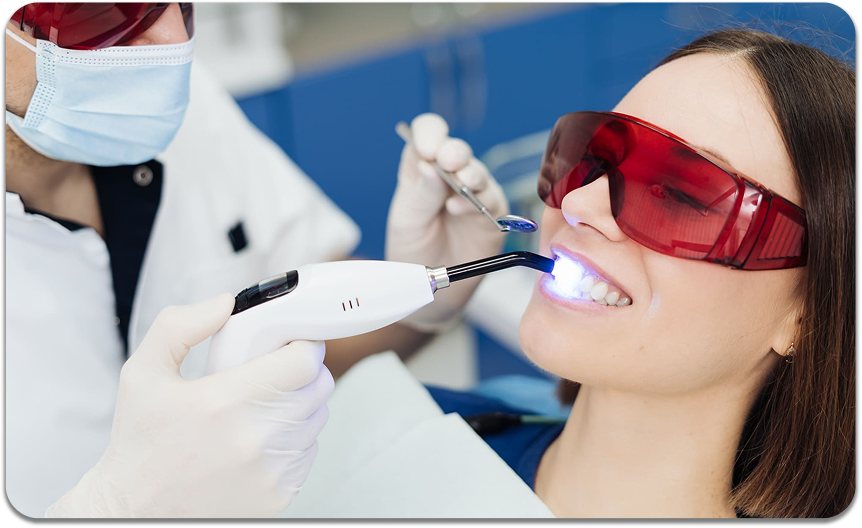
Yes. The Fotona LightWalker is an FDA-cleared medical device that has been used safely in dental practices around the world for many years. Dr. Dham follows strict safety protocols for every laser procedure, including the use of protective eyewear for both patient and team. Laser dentistry has an excellent safety profile when performed by a trained and experienced clinician.
Does laser dentistry hurt?
Most patients are genuinely surprised by how comfortable laser procedures are. Because the laser works without the vibration or physical pressure of a drill, many patients report feeling little to nothing during treatment. For soft tissue procedures, local anesthetic is often not required at all. For more involved work, Dr. Dham will ensure you are completely comfortable before proceeding.
How is laser gum treatment different from traditional gum surgery?
Traditional gum surgery typically involves cutting the gum tissue with a scalpel, physically removing diseased areas, and placing sutures. Recovery can take one to two weeks and involves notable post-operative discomfort. Laser gum treatment achieves similar or better clinical outcomes with far less trauma to the tissue - meaning less bleeding, no stitches in most cases, and a recovery measured in days rather than weeks.
Am I a candidate for laser dentistry?
Most patients are suitable candidates for laser-assisted procedures. Dr. Dham will evaluate your specific situation during your consultation and advise whether laser treatment is the most appropriate approach for your needs. Patients with certain medical conditions or implanted devices may require additional assessment before laser treatment.
How long does recovery take after a laser procedure?
Recovery times vary depending on the procedure, but laser-assisted treatments consistently involve faster healing than their traditional equivalents. For soft tissue procedures, most patients feel back to normal within one to two days. Dr. Dham will give you specific post-procedure guidance based on your individual treatment.
Does insurance cover laser dental treatments?
Coverage depends on your specific insurance plan and the procedure being performed. Many laser-assisted procedures are covered under the same codes as their traditional equivalents. Dr. Dham’s team will verify your benefits and walk you through all costs before treatment begins - no surprises.
Faster care, all under one roof
3D Printing Lab
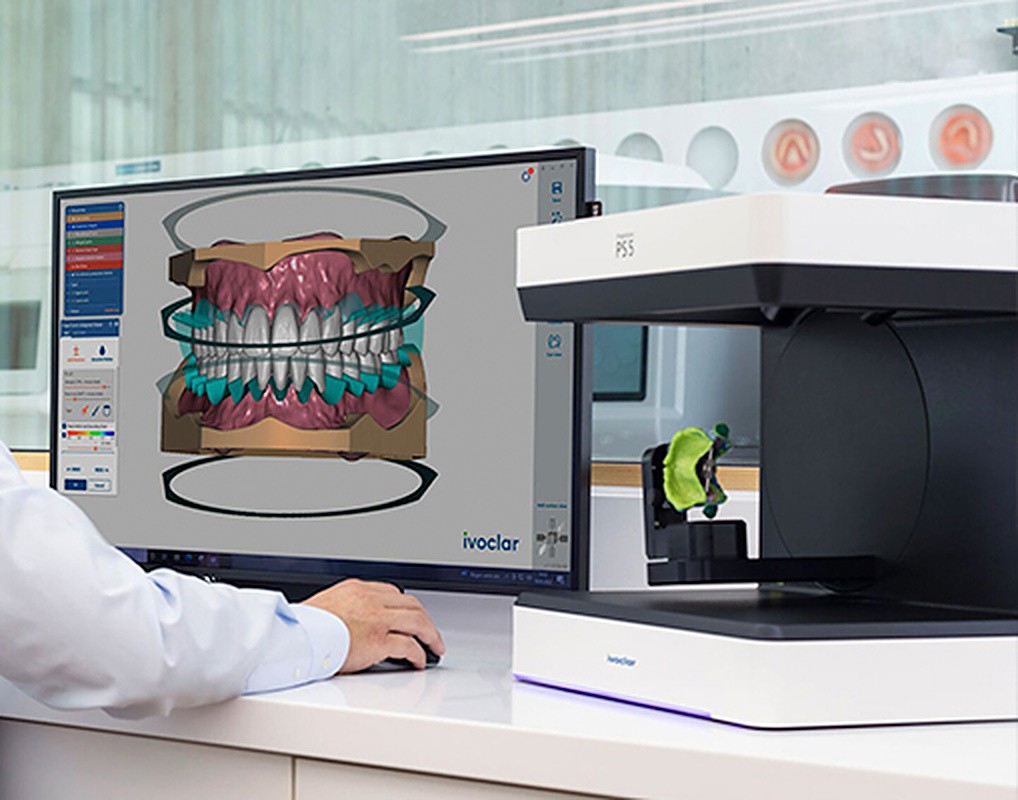
Most dental offices send your treatment work to an outside lab and ask you to wait days, sometimes weeks for the result to come back. At Westside Dental Center, Dr. Uttma Dham does things differently. Our in-house 3D dental printing lab means surgical guides, study models, and provisional restorations are designed and printed right here in our Plantation office - so your care moves faster, stays more accurate, and never depends on someone else’s timeline.
What is a 3D dental printing lab - and why does having one in-house matter?
An in-house 3D dental printing lab changes that equation entirely.
The result is a level of speed, accuracy, and quality control that simply isn’t possible when your dental work is being handled somewhere else. It’s one of the key reasons patients across Plantation, Davie, Sunrise, and Fort Lauderdale choose Westside Dental Center for their most important dental treatment.
Benefits to our patients
Why an in-house 3D printing lab makes a real difference for patients
01
No More Waiting Weeks for Dental Work
When Dr. Dham can design and print components in-house, the waiting game disappears. Surgical guides for implant placement, study models for treatment planning, and provisional restorations that protect your teeth between appointments - all of these can be produced on the same day or within a single visit. For patients who have busy schedules and limited patience for unnecessary delays, this is a significant advantage.
02
Greater Accuracy at Every Stage of Treatment
Because the digital scan data flows directly from Dr. Dham’s imaging software into the 3D printer - without being emailed to a third party, reinterpreted by a technician, or shipped across the country - the risk of error is dramatically reduced. Every printed component is fabricated to the exact specifications Dr. Dham has set, based on a precise digital model of your individual anatomy. The fit is more accurate, and the outcome is more predictable.
03
Dr. Dham Oversees Every Detail
With an external lab, a dentist hands off control the moment the impression or scan leaves the office. With an in-house printing lab, Dr. Dham retains complete oversight of every step. She can review the digital design before it’s printed, make adjustments in real time, and inspect the finished product before it’s used in your treatment. That level of control directly benefits you as a patient.
04
More of Your Care Stays in One Place
One of the founding principles of Westside Dental Center is that patients shouldn’t need to go elsewhere for the care they need. The in-house 3D printing lab is a direct extension of that philosophy. By bringing another critical part of the treatment process in-house, Dr. Dham reduces the number of external dependencies in your care - keeping things simpler, faster, and better coordinated from start to finish.
How we use it
What does Dr. Dham’s in-house 3D printing lab actually make?
Surgical guides for dental implants
Precisely designed drill guides that allow Dr. Dham to place implants at the exact angle, depth, and position planned in her 3D imaging software - reducing surgical variability and improving implant outcomes.
Study models and diagnostic casts
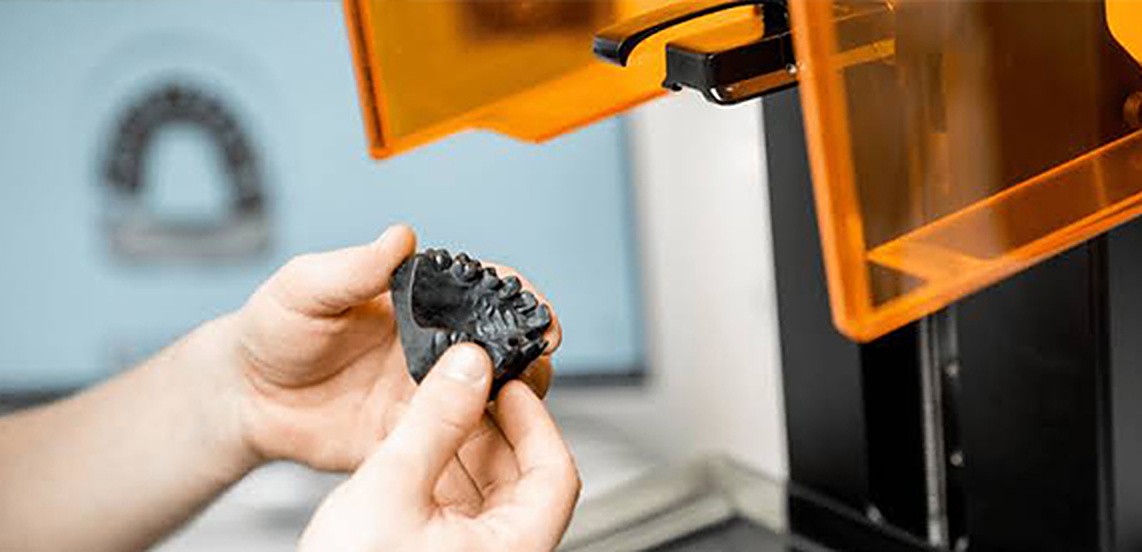
Accurate physical models of your teeth and bite, used for treatment planning, patient education, and smile design consultations.
Provisional restorations
Temporary crowns, bridges, and veneers that protect your teeth and maintain aesthetics between appointments while permanent restorations are being fabricated.
Custom trays and appliances
Printed trays for whitening, fluoride treatment, and other custom dental appliances that need to fit your mouth precisely.
Pre-surgical planning models
Physical 3D replicas of complex anatomy used to plan and rehearse challenging surgical cases before the patient sits in the chair.
FAQ
Frequently asked questions about our in-house 3D dental printing lab
What materials does the 3D printer use?
Dr. Dham’s in-house lab uses dental-grade, biocompatible photopolymer resins specifically formulated for clinical dental applications. These materials are FDA-cleared for use in the mouth and meet the same standards as materials used by professional dental laboratories. Dr. Dham will always advise you on the materials being used in your specific treatment.
Does having an in-house lab mean my treatment is faster?
In most cases, yes - significantly. Components that would previously require days or weeks of external lab turnaround time can now be produced in-house within hours. This means fewer appointments, less waiting between treatment stages, and a faster path from planning to completed care.
How does the 3D printing process work?
After Dr. Dham captures a digital scan of your teeth using our intraoral scanners, the data is used to design the required component in dental CAD software. Once the design is reviewed and approved, it is sent to the 3D printer, which builds the component layer by layer from dental-grade resin. The finished piece is then post-processed, inspected, and prepared for use in your treatment - all within the same office.
Is in-house 3D printing used for permanent crowns or restorations?
Surgical guides, study models, provisional restorations, and custom appliances are printed in-house. For permanent crowns and bridges, Dr. Dham uses her in-house CAD/CAM milling system, which mills restorations from solid blocks of dental-grade ceramic, delivering the strength and aesthetics required for long-term, permanent restorations.
Are 3D printed dental components as good as traditionally fabricated ones?
The quality is excellent and in many cases superior to traditionally fabricated equivalents, particularly in terms of fit accuracy. For final permanent restorations such as crowns, Dr. Dham uses CAD/CAM milling technology, which produces resto